Korean poetry · 김소월
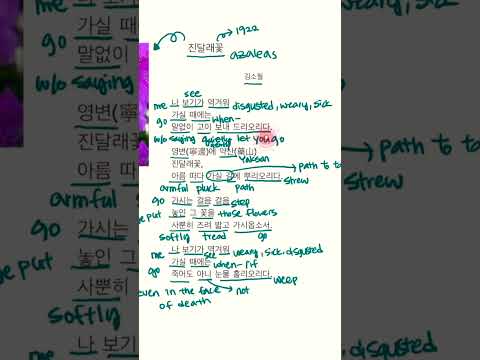
“나 보기가 역겨워 가실 때에는 말없이 고이 보내드리오리다”
The most famous breakup lines in Korean poetry — quiet dignity, sorrow, and unconditional letting go.
The most famous breakup lines in Korean poetry — quiet dignity, sorrow, and unconditional letting go.
Video lesson
A short focused on the opening lines of 진달래꽃 — “나 보기가 역겨워 가실 때에는 말없이 고이 보내드리오리다” — and what they mean in natural Korean.
나 보기가 역겨워 가실 때에는
말없이 고이 보내드리오리다
Romanization: na bogiga yeokgyeowo gasil ttae-eneun mareopssi go-i bonaedeuriorida
📚 Key Vocabulary
👉 Natural English:
“If seeing me disgusts you and you decide to leave, I will send you off quietly and gently.”
You can also translate the second half more emotionally as:
“If you can’t stand the sight of me and choose to go, I’ll let you go in silence, as gently as I can.”
The speaker is being abandoned, but instead of pleading or blaming, they promise to send the other person off softly and without a word. That quiet self-restraint — loving someone enough to let them go kindly — is what makes this line so devastating.
Key phrase
나 보기가 = the act of seeing me 역겨워 = (you) feel repulsed / disgusted
“나 보기가” is literally “the seeing of me.” It turns the act of looking at the speaker into a kind of object. “역겹다” is a strong word — not just mild dislike, but deep emotional aversion.
나 보기가 그렇게 역겨워요?
Is seeing me really that disgusting to you?
“가실” uses the honorific 시 (-시-) on 가다 (“to go”), which elevates the subject — the person who is leaving. Even though they’re abandoning the speaker, the speaker still speaks respectfully.
가실 때에는 조심히 가세요.
When you leave, please go safely.
Nuance check
말없이 = without saying anything 고이 = tenderly, carefully, gently (old-fashioned / literary)
The pain is there, but it’s quiet. “말없이” suggests no complaints, no begging, no drama. “고이” adds tenderness: the speaker will handle this goodbye as if handling something fragile.
꽃을 고이 눕혀 두었다.
I laid the flowers down gently.
“보내드리오리다” is a very formal, archaic form. It combines:
So the speaker is essentially saying: “I, humbly, will send you off.” It’s a **vow** rather than a casual statement — a promise to behave with dignity, no matter how much it hurts.
기다리오리다 (old-fashioned)
I shall wait (for you).
Instead of accusing the other person — “Why are you leaving me?” — the speaker blames themselves and promises a gentle goodbye. That emotional self-control makes the sorrow feel even deeper.
Note: This quiet, self-sacrificing love is a recurring theme in 김소월’s poetry and in older Korean love songs.
People quote this line when talking about breakups, one-sided love, or the idea of letting someone go without holding them back. It can be sincere or slightly dramatic/ironic, depending on tone.
완전 진달래꽃이야. 나 보기가 역겨워 가실 때에는… 이러면서 보내주는 느낌.
It’s totally like *Azaleas* — like, ‘If seeing me disgusts you and you’re leaving…’ and then you still let them go.
헤어질 때 이 시 생각났어요. 말없이 고이 보내드리오리다, 이런 마음.
When we broke up, I thought of this poem. That feeling of ‘I’ll just quietly and gently let you go.’
What does “역겹다” most strongly express in this line?
True or false: “보내드리오리다” is a casual modern way to say “I’ll send you off.”
Which translation best captures the feeling of the whole line?
K-Lines members see the full breakdown here.
Unlock extra examples, tone notes, and quizzes for this line and other lessons.
K-Lines members see the full breakdown here.
Unlock extra examples, tone notes, and quizzes for this line and other lessons.
Unlock extra examples, tone notes, and full quizzes for “나 보기가 역겨워 가실 때에는 말없이 고이 보내드리오리다” and other lessons.
Continue learning with more Korean phrases from K-dramas, K-pop, and daily life.